Teaching spelling in a French immersion classroom is a little tricky. A lot of French words with the same sound can be spelled three different ways (or more!). If you’ve ever watched your students start blankly at words like beau or chanson, wondering why it’s not spelled bo or shonson, you know their pain.
And they’re not wrong, it’s incredibly confusing.
The good news? Teaching phonics (yes, even in French) can make a world of difference. Phonics helps students understand the relationship between French phonics (sounds) and the way those sounds are written (spelling). It’s like a secret tool to decode and write words with confidence.
In this post, we’ll look at how to use phonics to teach spelling effectively, from key rules to focus on, to classroom tools like sound walls that help it all click. Let’s dive in.
Why Teaching Phonics Should Be the Foundation of Spelling Instruction
For a long time, many of us relied on weekly word lists, rote memorisation, and Friday spelling tests to teach spelling.
The problem? Those methods don’t actually teach why words are spelled the way they are. Students might memorise the words long enough to ace the test, but by Monday, many of those spellings have vanished from memory. Just like cramming for an exam and forgetting everything the moment it’s over.
Spelling isn’t about memorising; it’s about understanding. When students learn how sounds (phonemes) connect to the letters or letter combinations (graphemes) that represent them, spelling starts to make sense. They begin to recognise patterns, apply rules, and transfer what they know to new words.
In other words, phonics gives students the “why” behind spelling, turning it from guesswork into a logical, meaningful process that sticks. In French, this approach is especially valuable because students can’t rely on English spelling habits. They need to build new sound–spelling patterns from the start.
Key Features of French Phonics That Impact Spelling
Translating phonics to spelling is about connecting the dots between the sounds and the spelling. Students need to understand not just what the spelling is, but why it is that way.
French spelling (unlike English!) follows clear rules and patterns. Once you know the rules behind the words, everything starts to click.
For example, you’ll never find the spelling eau at the beginning of a word. The sound /??/ is almost always spelled with an n, except when the next letter is a b or p, in which case it changes to an m. And when you see an e at the end of a word, it usually means the final consonant will be pronounced.
Makes sense, right?
Most native French speakers internalise these rules without ever truly recognising them. But for children learning French for the first time, it’s crucial to lay down this French phonics foundation. It avoids a lot of confusion.
Here are a few other key features worth highlighting:
- Multiple graphemes for one sound – The sound /o/ can be written o, au, or eau.
- Silent letters – Final consonants are often silent (chat, grand), which can easily confuse young spellers.
- Accents – Accents aren’t just decorations; they change pronunciation (é vs. è) and sometimes the meaning entirely.
- Nasal vowels – Sounds like /an/, /on/, and /in/ are unique to French and need explicit teaching so students can link each sound to its spelling pattern.
Step-by-Step Approach to Using French Phonics to Teach Spelling
Don’t overcomplicate your lessons. French phonics is supposed to simplify, not increase confusion.
All you need is a clear structure (and a bit of consistency) to help your students start to recognise the natural spelling patterns. Once they start to get the hang of it, they’ll apply them in their writing.
I’ve created a helpful framework to guide your lessons. Feel free to adjust or adapt it to your students.
1. Explicitly teach one sound at a time
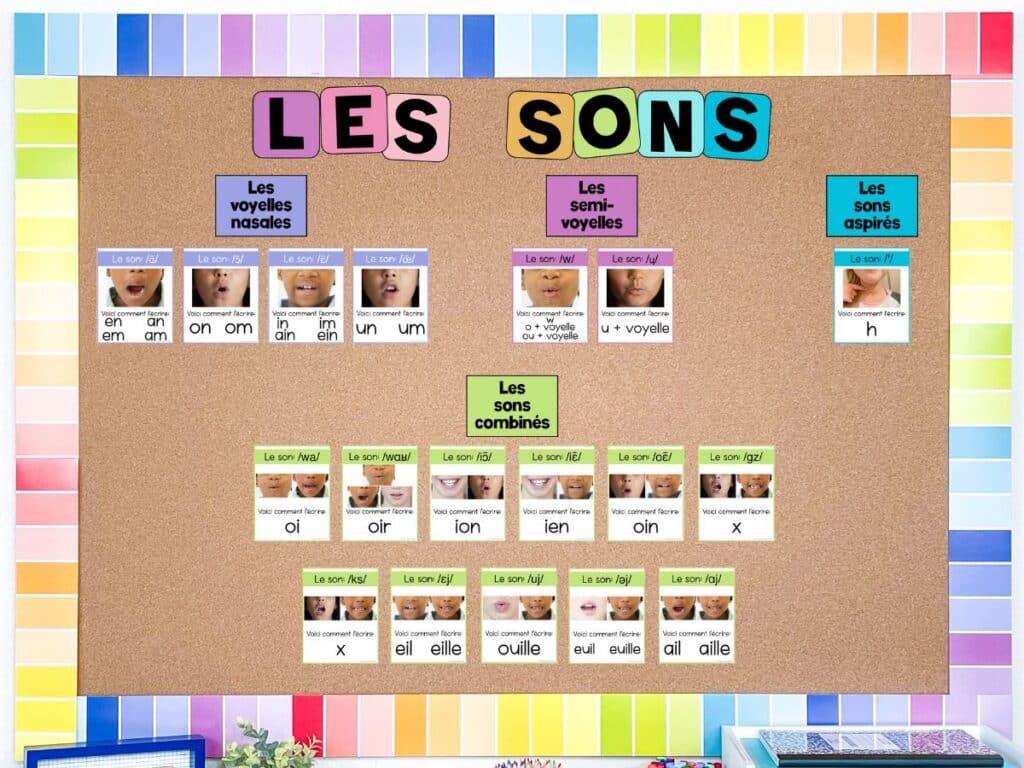
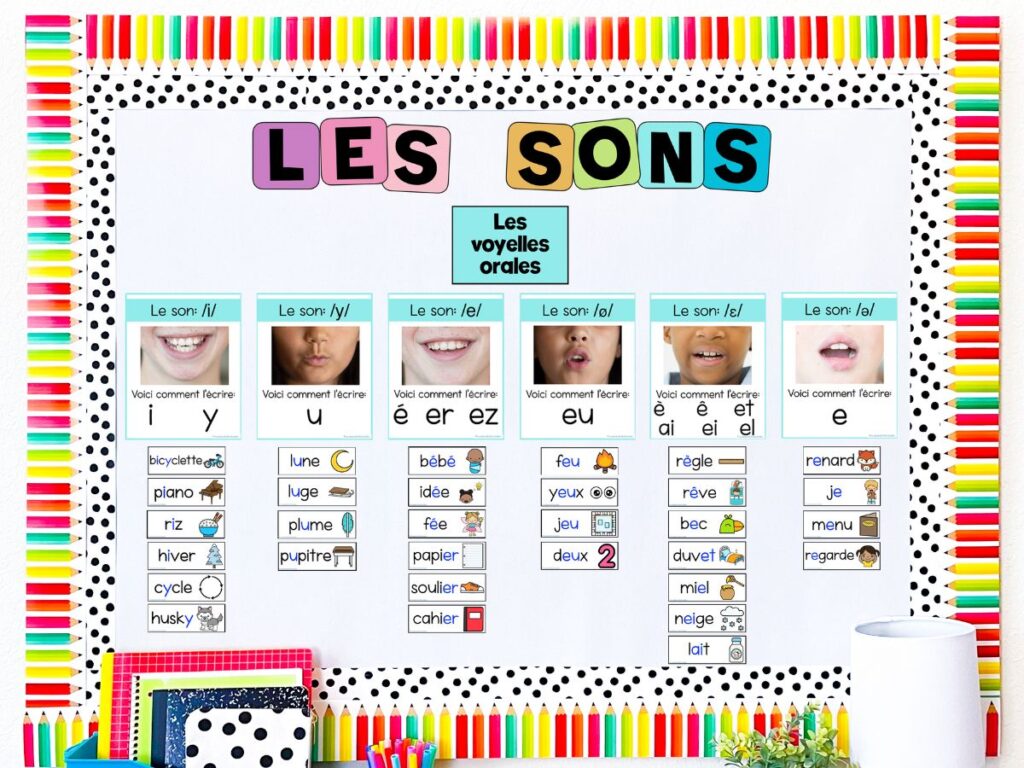
Introduce a specific sound (phoneme) and explore how it looks and feels. Use visuals, mouth-formation pictures, and anchor words to help students connect the sound to meaning.
2. Explore different ways to spell that sound
Show the most common spellings first and save the trickier or less frequent ones for later. Focus on understanding, not memorisation.
3. Use a sound wall
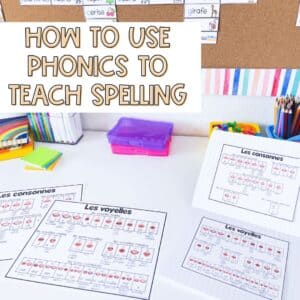
A French sound wall (like this one) gives students a visual reference while they write. Keep referring to it during writing lessons so they learn to use it independently.
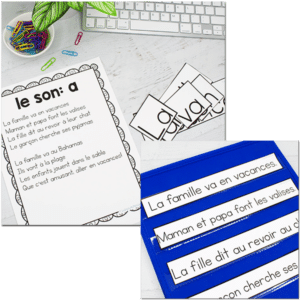
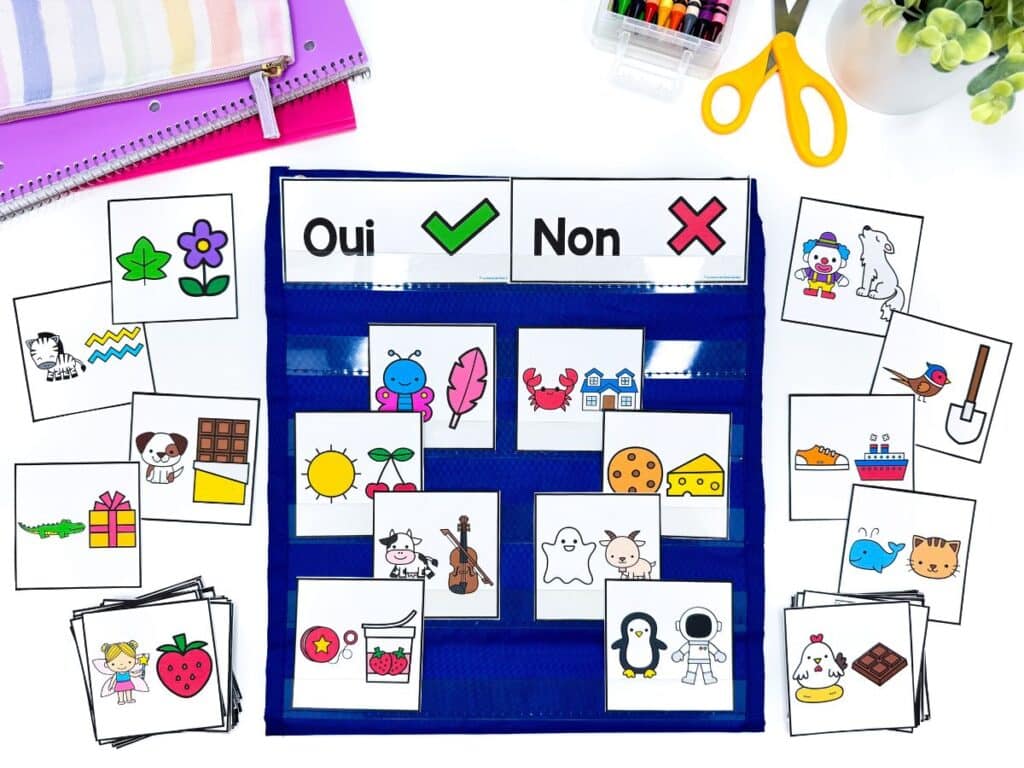
4. Play with word sorts and pattern games
Have students sort words by grapheme or spelling pattern. Make it interactive with whiteboards, letter tiles, or even simple cut-and-sort cards.
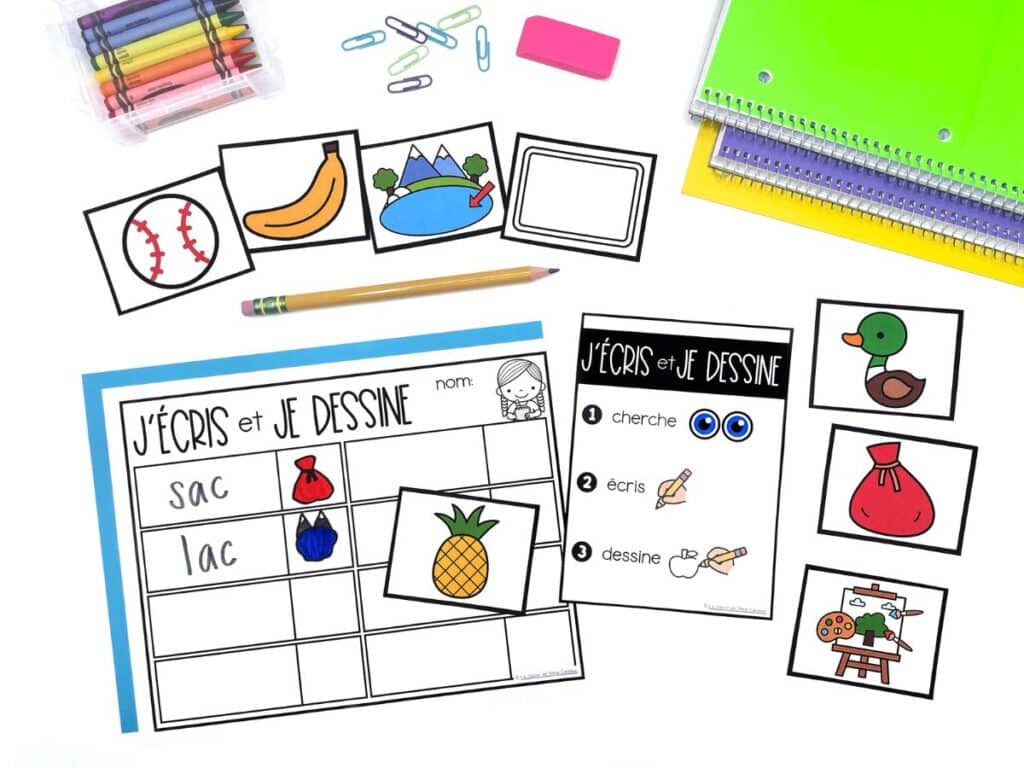
5. Connect phonics to writing
Say a word aloud, have students identify the target sound, and then spell it on their whiteboards. Discuss the different spelling possibilities together.
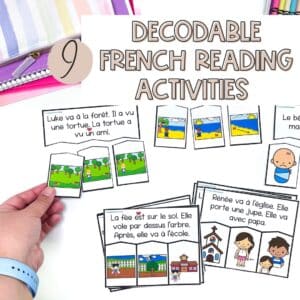
6. Provide decodable practice
Let students read and spell using the same phonics focus. This helps solidify the sound–spelling connection.
7. Review and revisit
Spiral previously taught patterns into future lessons. Regular review helps the learning stick long-term.
Tips for Teaching French Phonics
Teaching French phonics doesn’t have to drown out your whole literacy block. In fact, short, focused lessons tend to work best. Follow these tips:
- Keep lessons short, clear, and consistent. Daily is best, even just 10–15 minutes can make a big difference. The key is repetition and routine.
- Use multisensory strategies. Have students tap out sounds, build words with magnetic letters, stamp them, or highlight graphemes. Engaging multiple senses helps strengthen those sound–spelling connections.
- Encourage inventive spelling. It’s a good thing when students try to spell based on their phonics knowledge! It shows they’re applying what they’ve learned. Celebrate those attempts, it’s how real understanding develops.
- Post anchor charts and sound walls. Create a “We can spell these sounds” wall that evolves with your lessons. Add examples, anchor words, or student samples to make it meaningful and visible.
- Use your sound wall regularly. Don’t let it just sit on the wall. Model how to use it during writing lessons and refer back to it often. The more you use it, the more your students will too.
What to Avoid
Even with the best intentions, a few habits can slow your students’ progress:
- Random word lists. Avoid giving spelling lists that don’t match your phonics progression. It only causes confusion.
- Expecting perfect spelling too soon. Students need explicit instruction and practice before accuracy comes.
- Correcting without teaching. When you spot an error, use it as a teachable moment. Show students why the word is spelled that way and help them fix it themselves.
Keeping these in mind will make your phonics-based spelling lessons far more effective, and much less stressful for you and your students.
Want to check out the resources listed?
All the links above lead to TPT, but the resources are also available on our website. Here are the resources available here for purchase in CAD. Don’t forget you can also buy credits for an additional discount (up to $15 off).